The Goodman Affair: Monsanto Targets the Heart of Science

by Claire Robinson and Jonathan Latham, PhD Richard Smith, former editor of the British Medical Journal, has jested that instead of scientific peer review, its rival The Lancet had a system of throwing a pile of papers down the stairs and publishing those that reached the bottom. On another occasion, …

Is the Hidden Viral Gene Safe? GMO Regulators Fail to Convince

by Jonathan Latham, PhD and Allison Wilson, PhD Having unwittingly allowed a viral gene into the food chain, the response of regulators so far has been to release statements intended to allay public concerns. These statements, however, are inadequate to meet a potentially major food crisis. Not only do they …

Regulators Discover a Hidden Viral Gene in Commercial GMO Crops

by Jonathan Latham and Allison Wilson How should a regulatory agency announce they have discovered something potentially very important about the safety of products they have been approving for over twenty years? In the course of analysis to identify potential allergens in GMO crops, the European Food Safety Authority (EFSA) …

How Millions of Farmers are Advancing Agriculture For Themselves

by Jonathan Latham The world record yield for paddy rice production is not held by an agricultural research station or by a large-scale farmer from the United States, but by Sumant Kumar who has a farm of just two hectares in Darveshpura village in the state of Bihar in Northern …

Recent Articles:

The Goodman Affair: Monsanto Targets the Heart of Science

R Goodman

by Claire Robinson and Jonathan Latham, PhD

Richard Smith, former editor of the British Medical Journal, has jested that instead of scientific peer review, its rival The Lancet had a system of throwing a pile of papers down the stairs and publishing those that reached the bottom. On another occasion, Smith was challenged to publish an issue of the BMJ exclusively comprising papers that had failed peer review and see if anybody noticed. He replied, “How do you know I haven’t already done it?”

As Smith’s stories show, journal editors have a lot of power in science – power that provides opportunities for abuse. The life science industry knows this, and has increasingly moved to influence and control science publishing. … Continue Reading

The Experiment Is on Us: Science of Animal Testing Thrown into Doubt

by Pat Dutt and Jonathan Latham, PhD

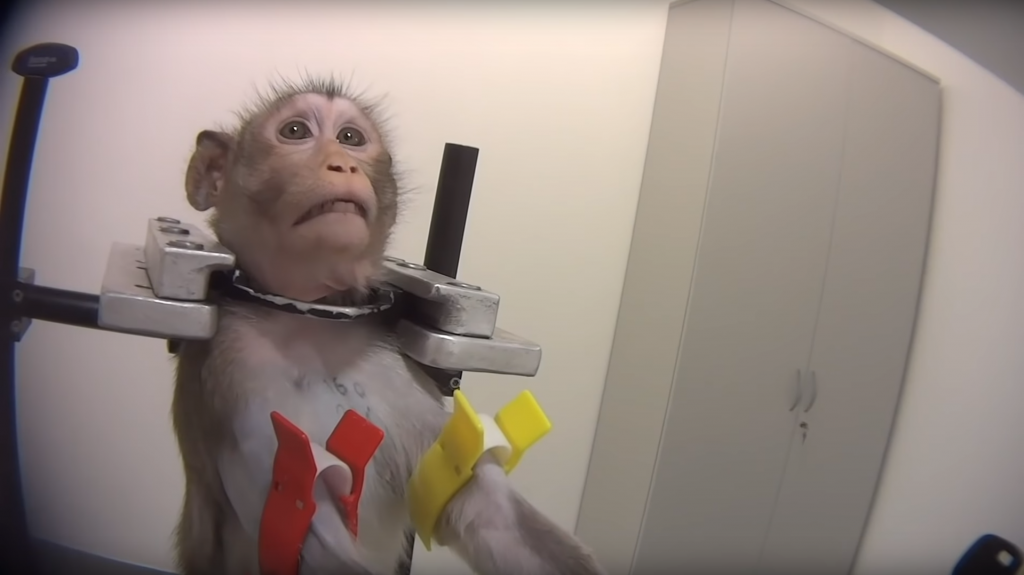
New scientific research has cast grave doubt on the safety testing of hundreds of thousands of consumer products, food additives and industrial chemicals.

Everyday products, from soft drinks and baby foods, to paints, gardening products, cosmetics and shampoos, contain numerous synthetic chemicals as preservatives, dyes, active ingredients, or as contaminants. Official assurances of the safety of these chemicals are based largely on animal experiments that use rabbits, mice, rats and dogs. But new results from a consortium of researchers and published in the Proceedings of the National Academy of Sciences suggest such assurances may be worthless (Seok et al. 2013). … Continue Reading

Is the Hidden Viral Gene Safe? GMO Regulators Fail to Convince

EFSA Head Office

by Jonathan Latham, PhD and Allison Wilson, PhD

Having unwittingly allowed a viral gene into the food chain, the response of regulators so far has been to release statements intended to allay public concerns. These statements, however, are inadequate to meet a potentially major food crisis. Not only do they fail to address important issues but they are also scientifically questionable even within their chosen frame of reference.

The GMO regulators involved are the European Food Safety Authority (EFSA) and Food Standards Australia New Zealand (FSANZ). These two agencies have separately released statements (see complete texts EFSA and FSANZ) defending their risk assessments and conclusions in response to our recent article “Regulators Discover a Hidden Viral Gene in GMO crops“. … Continue Reading

Regulators Discover a Hidden Viral Gene in Commercial GMO Crops

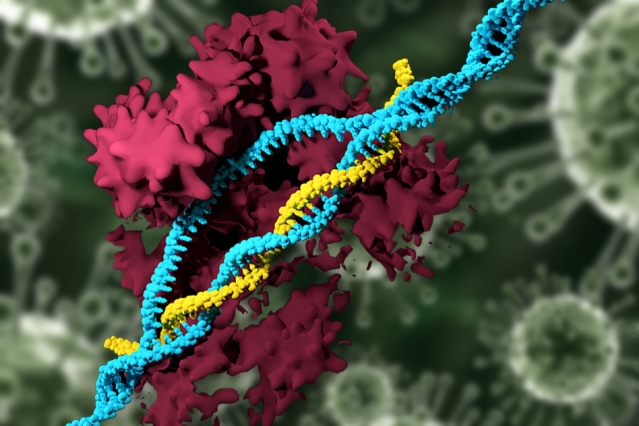
Cauliflower Mosaic Virus

by Jonathan Latham and Allison Wilson

How should a regulatory agency announce they have discovered something potentially very important about the safety of products they have been approving for over twenty years?

In the course of analysis to identify potential allergens in GMO crops, the European Food Safety Authority (EFSA) has belatedly discovered that the most common genetic regulatory sequence in commercial GMOs also encodes a significant fragment of a viral gene (Podevin and du Jardin 2012). This finding has serious ramifications for crop biotechnology and its regulation, but possibly even greater ones for consumers and farmers. This is because there are clear indications that this viral gene (called Gene VI) might not be safe for human consumption. It also may disturb the normal functioning of crops, including their natural pest resistance. … Continue Reading

How Millions of Farmers are Advancing Agriculture For Themselves

SRI-grown Rice in China

by Jonathan Latham

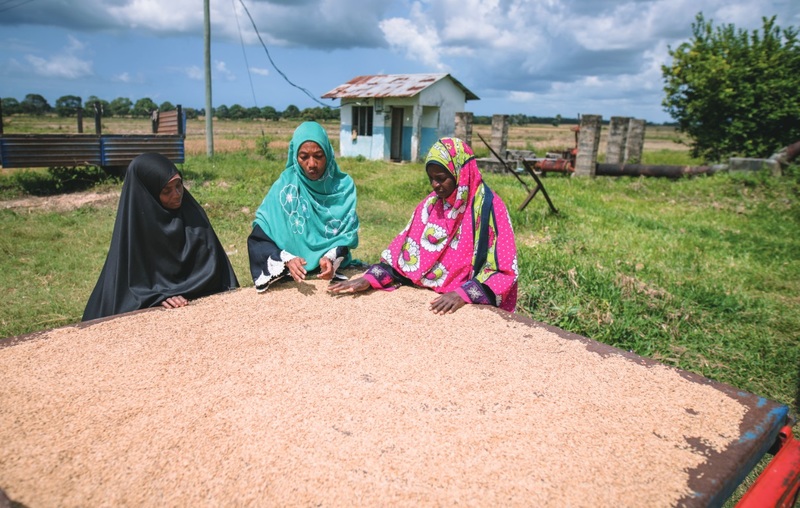
The world record yield for paddy rice production is not held by an agricultural research station or by a large-scale farmer from the United States, but by Sumant Kumar who has a farm of just two hectares in Darveshpura village in the state of Bihar in Northern India. His record yield of 22.4 tons per hectare, from a one-acre plot, was achieved with what is known as the System of Rice Intensification (SRI). To put his achievement in perspective, the average paddy yield worldwide is about 4 tons per hectare. Even with the use of fertilizer, average yields are usually not more than 8 tons.

Sumant Kumar’s success was not a fluke. Four of his neighbors, using SRI methods, and all for the first time, matched or exceeded the previous world record from China, 19 tons per hectare. Moreover, they used only modest amounts of inorganic fertilizer and did not need chemical crop protection. … Continue Reading

Risk and Responsibility: Farming, Food, and Unconventional Gas Drilling

November 12, 2012 Commentaries, Health No Comments
American Gasland

Michelle Bamberger and Robert E. Oswald (Photo credit: Marcellus Protest)

Extraction of hydrocarbon gas from tight shale formations using horizontal drilling and hydraulic fracturing has been advertised as a path toward energy independence for the United States and is being promoted worldwide. This is tempered by environmental and societal concerns that have led to banning the practice in some countries (e.g., France), at least one state in the U.S. (Vermont), and numerous towns and cities in the United States. In the United States, the process itself is largely regulated at the state level, with exemptions from federal laws regulating air, drinking water and hazardous waste disposal. Regulation at the state level varies considerably among states with significant shale deposits, as does the level of enforcement of regulations. The argument often given to suggest that the process is safe cites the fact that in the sixty years since the first gas well was hydraulically fractured, the industry has not found proof it finds acceptable that drinking water has been contaminated. This assertion is not universally accepted because of at least two factors. … Continue Reading

Seralini and Science: an Open Letter

Gilles-Eric Seralini

(Authors listed below) (Traduction Francaise)

A new paper by the French group of Gilles-Eric Seralini describes harmful effects on rats fed diets containing genetically modified maize (variety NK603), with and without the herbicide Roundup, as well as Roundup alone. This peer-reviewed study (Seralini et al., 2012), has been criticized by some scientists whose views have been widely reported in the popular press (Carmen, 2012; Mestel, 2012; Revkin, 2012; Worstall, 2012).  Seralini et al. (2012) extends the work of other studies demonstrating toxicity and/or endocrine-based impacts of Roundup (Gaivão et al., 2012; Kelly et al., 2010; Paganelli et al., 2010; Romano et al., 2012), as reviewed by Antoniou et al. (2010).

The Seralini publication, and resultant media attention, raise the profile of fundamental challenges faced by science in a world increasingly dominated by corporate influence. These challenges are important for all of science but are rarely discussed in scientific venues. … Continue Reading

Vitamin A Wars: the Downsides of Donor-driven Aid

September 24, 2012 Commentaries, Health 6 Comments
Growing leafy greens in India

Ted Greiner, Professor of Nutrition, Hanyang University, Korea (Photo Credit: Jon Orlando)

Surely one of the most precious of human dreams is to become rich and famous by doing good for others. And what could do more good than eradicating global malnutrition? Subtle variations on that theme have muddled the field of international nutrition for decades. Donor governments vary, but most want some proportion, and some want the vast majority, of their “donations” to poor countries to come back to them. Sometimes this is achieved by building up a cadre of domestic experts, or by providing products, including foods to the poor countries that will create preferences that will have to be satisfied by imports in the future. Meanwhile, those who feel uncomfortable with this way of doing things, and who ask why the capacity of developing countries cannot be built, and funds be provided to allow them to independently solve their problems, tend to get labeled as radicals. … Continue Reading

Science News on the Web

Why Independent Science News?

Scientific inventions and ideas shape the future. As science becomes ever more beset by commercial and ideological pressures, there is now an urgent need for scientific reporting and analysis from an independent, expert, public interest perspective. With this as its standard, Independent Science News works to shape a future that is biodiverse, just, and healthy for everyone.
More about us...

Related News Articles

The Experiment Is on Us: Science of Animal Testing Thrown into Doubt

New Report Links Food, Climate and Agricultural Policies

Psychiatrists plead to continue funding of genetic approaches to disease

23andMe disproves its own business model

How Agriculture Can Provide Food Security Without Destroying Biodiversity

Strangely like Fiction: Sponsored Academics Admit Falsely Claiming Dairy Hormone Safety Endorsements

Transgenic High-Lysine Corn LY038 Withdrawn After EU Raises Safety Questions

Welsh Farmer’s Defiance of GMO ‘Ban’ Not So Defiant After All

Commentaries

The Goodman Affair: Monsanto Targets the Heart of Science

R Goodman

by Claire Robinson and Jonathan Latham, PhD Richard Smith, former editor of the British Medical Journal, has jested that instead of scientific peer review, its rival The Lancet had a system of throwing a pile of papers down the stairs and publishing those that reached the bottom. On another occasion, …

Is the Hidden Viral Gene Safe? GMO Regulators Fail to Convince

EFSA Head Office

by Jonathan Latham, PhD and Allison Wilson, PhD Having unwittingly allowed a viral gene into the food chain, the response of regulators so far has been to release statements intended to allay public concerns. These statements, however, are inadequate to meet a potentially major food crisis. Not only do they …

Regulators Discover a Hidden Viral Gene in Commercial GMO Crops

Cauliflower Mosaic Virus

by Jonathan Latham and Allison Wilson How should a regulatory agency announce they have discovered something potentially very important about the safety of products they have been approving for over twenty years? In the course of analysis to identify potential allergens in GMO crops, the European Food Safety Authority (EFSA) …

How Millions of Farmers are Advancing Agriculture For Themselves

SRI-grown Rice in China

by Jonathan Latham The world record yield for paddy rice production is not held by an agricultural research station or by a large-scale farmer from the United States, but by Sumant Kumar who has a farm of just two hectares in Darveshpura village in the state of Bihar in Northern …

More Commentaries...

Reviews

The China Study: The Most Comprehensive Study of Nutrition Ever Conducted and the Startling Implications for Diet, Weight Loss and Long-Term Health

The China Study

Author: T. Colin Campbell, PhD and Thomas M. Campbell II ISBN: 1932100660, 978-1932100662 Publisher: Benbella Books (2004) What will it take for veggie stir-fry on rice to replace a beef burger on a bun as the all-American meal? A switch to a more plant-based diet has been standard dietary advice …

The Unhealthy Truth: How our Food is Making us Sick and What We Can Do About It

The Unhealthy Truth

Author: Robyn O’Brien (with Rachel Kranz) ISBN: 978-0-7679-3071-0 Publisher: Broadway books (2009) Allergies and food intolerances are serious medical conditions. They are the cause of many deaths and hospitalizations annually and they predispose to other illnesses. They can also exact a high toll in other ways since worry, inconvenience and …

More Reviews...