
Home » (Un)Sustainable Farming » Recent Articles:

How Millions of Farmers are Advancing Agriculture For Themselves

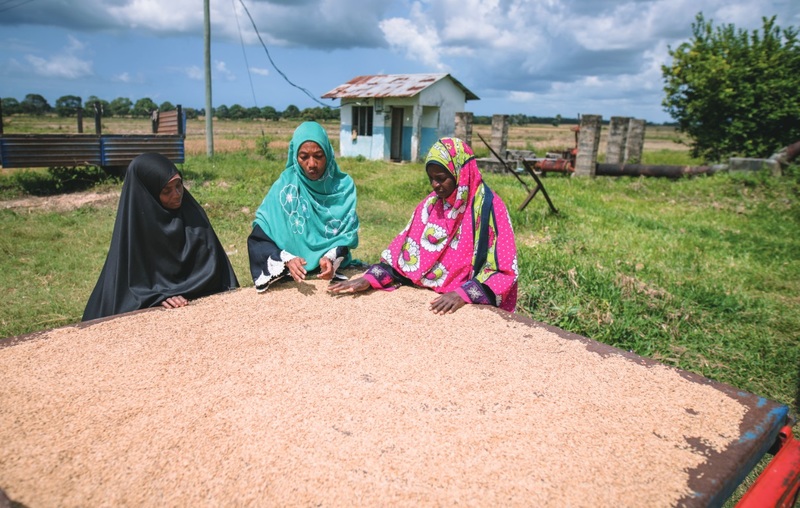
SRI-grown Rice in China

by Jonathan Latham

The world record yield for paddy rice production is not held by an agricultural research station or by a large-scale farmer from the United States, but by Sumant Kumar who has a farm of just two hectares in Darveshpura village in the state of Bihar in Northern India. His record yield of 22.4 tons per hectare, from a one-acre plot, was achieved with what is known as the System of Rice Intensification (SRI). To put his achievement in perspective, the average paddy yield worldwide is about 4 tons per hectare. Even with the use of fertilizer, average yields are usually not more than 8 tons.

Sumant Kumar’s success was not a fluke. Four of his neighbors, using SRI methods, and all for the first time, matched or exceeded the previous world record from China, 19 tons per hectare. Moreover, they used only modest amounts of inorganic fertilizer and did not need chemical crop protection. … Continue Reading

America: Becoming a Land Without Farmers

Abandoned Farmhouse

Evaggelos Vallianatos (Photo Credit: Homini:))

The plutocratic remaking of America has a parallel in the countryside. In rural America less than 3 percent of farmers make more than 63 percent of the money, including government subsidies.

The results of this emerging feudal economy are everywhere. Large areas of the United States are becoming impoverished farm towns with abandoned farmhouses and deserted land. More and more of the countryside has been devoted to massive factory farms and plantations. The consequences, though worse now than ever, have been there for all to see and feel, for decades. … Continue Reading

Way Beyond Greenwashing: Have Corporations Captured Big Conservation?

Malaysia: Deforestation for Agriculture

Jonathan Latham (Photo Credit: auspices)

Imagine an international mega-deal. The global organic food industry agrees to support international agribusiness in clearing as much tropical rainforest as they want for farming. In return, agribusiness agrees to farm the now-deforested land using organic methods, and the organic industry encourages its supporters to buy the resulting timber and food under the newly devised “Rainforest Plus” label. There would surely be an international outcry.

Virtually unnoticed, however, even by their own membership, the world’s biggest wildlife conservation groups have agreed exactly to such a scenario, only in reverse. Led by the World Wide Fund for Nature (WWF), many of the biggest conservation nonprofits including Conservation International and the Nature Conservancy have already agreed to a series of global bargains with international agribusiness. In exchange for vague promises of habitat protection, sustainability and social justice, these conservation groups are offering to greenwash industrial commodity agriculture.
… Continue Reading

New Report Links Food, Climate and Agricultural Policies

Jonathan Latham and Allison Wilson

Understanding of the ‘problem’ of agriculture took a giant step forward in 2007 with publication of the UN IAASTD report. This report, which was as important for agriculture as the IPCC reports have been for the climate, pinpointed a move to ecology-based agriculture as the key to meeting many other fundamental needs such as clean water, safe food and sustainability. What the IAASTD didn’t do, at least directly however, was to focus on politics, especially the obstacles to progress in improving agriculture.

A new report, The Wheel of Life:  Food, Climate, Human Rights and the Economy (Sept. 2011), released by the Center for Food Safety (CFS) and the Heinrich Böll Stiftung Foundation, usefully complements this deficit. … Continue Reading

How Agriculture Can Provide Food Security Without Destroying Biodiversity

Jonathan Latham and Allison Wilson

According to conventional wisdom, the Brazilian city of Belo Horizonte (pop. 2.5 million) has achieved something impossible. So, too, has the island of Cuba. They are feeding their hungry populations largely with local, low-input farming methods that enhance the environment rather than degrade it. They have achieved this, moreover, at a time of rising food prices when others have mostly retreated from their own food security goals.
… Continue Reading

Valuing Folk Crop Varieties for Agroecology and Food Security

Valuing Folk Crop Varieties

Dr Debal Deb, Founder-Chair, Centre for Interdisciplinary Studies, India (Photo Credit: D. Deb)

On May 25, 2009, Hurricane Aila hit the deltaic islands of the Sunderban of West Bengal. The estuarine water surged and destroyed the villages. Farmer’s homes were engulfed by the swollen rivers, their properties vanished with the waves, and their means of livelihood disappeared, as illustrated by the empty farm fields, suddenly turned salty. In addition, most of the ponds and bore wells became salinized.

… Continue Reading

US Crop Yield Increases Owe Little to Biotechnology

April 16, 2009 (Un)Sustainable Farming, Biotechnology, News Comments Off

Jonathan Latham and Allison Wilson

The latest advertising campaign from Monsanto claims that already its “advanced seeds… significantly increase crop yields…”, while since the mid-1990s the biotechnology industry has consistently proposed that higher yielding genetically engineered crops will be necessary to feed the world.
… Continue Reading

Royal Society Science and Agriculture Study Criticised

October 15, 2008 (Un)Sustainable Farming, Environment, News Comments Off

There are significant concerns about the long term security and sufficiency of global food-crop production due to the potential impact of many factors including climate change, population growth, changing consumption patterns and competing demands for land. The Royal Society is to study the extent to which the biological and related sciences can contribute to enhancing global food-crop production over the next 30 years within the context of changing global and regional demand during this period.
… Continue Reading

Science News on the Web

Why Independent Science News?

Scientific inventions and ideas shape the future. As science becomes ever more beset by commercial and ideological pressures, there is now an urgent need for scientific reporting and analysis from an independent, expert, public interest perspective. With this as its standard, Independent Science News works to shape a future that is biodiverse, just, and healthy for everyone.
More about us...

Related News Articles

New Report Links Food, Climate and Agricultural Policies

How Agriculture Can Provide Food Security Without Destroying Biodiversity

US Crop Yield Increases Owe Little to Biotechnology

Royal Society Science and Agriculture Study Criticised

Long-term persistence of GM oilseed rape in the seedbank

Pew Commission Report: Industrial Animal Farming Poses “Unacceptable” Risks for Public Health and the Environment

US Beef may cause Infertility in Males: A Hormone Link?

FOE Report Criticises EU Biotechnology Strategy as ill-focussed and not evidence-based

Commentaries

The Goodman Affair: Monsanto Targets the Heart of Science

R Goodman

by Claire Robinson and Jonathan Latham, PhD Richard Smith, former editor of the British Medical Journal, has jested that instead of scientific peer review, its rival The Lancet had a system of throwing a pile of papers down the stairs and publishing those that reached the bottom. On another occasion, …

Is the Hidden Viral Gene Safe? GMO Regulators Fail to Convince

EFSA Head Office

by Jonathan Latham, PhD and Allison Wilson, PhD Having unwittingly allowed a viral gene into the food chain, the response of regulators so far has been to release statements intended to allay public concerns. These statements, however, are inadequate to meet a potentially major food crisis. Not only do they …

Regulators Discover a Hidden Viral Gene in Commercial GMO Crops

Cauliflower Mosaic Virus

by Jonathan Latham and Allison Wilson How should a regulatory agency announce they have discovered something potentially very important about the safety of products they have been approving for over twenty years? In the course of analysis to identify potential allergens in GMO crops, the European Food Safety Authority (EFSA) …

How Millions of Farmers are Advancing Agriculture For Themselves

SRI-grown Rice in China

by Jonathan Latham The world record yield for paddy rice production is not held by an agricultural research station or by a large-scale farmer from the United States, but by Sumant Kumar who has a farm of just two hectares in Darveshpura village in the state of Bihar in Northern …

More Commentaries...

Reviews

The China Study: The Most Comprehensive Study of Nutrition Ever Conducted and the Startling Implications for Diet, Weight Loss and Long-Term Health

The China Study

Author: T. Colin Campbell, PhD and Thomas M. Campbell II ISBN: 1932100660, 978-1932100662 Publisher: Benbella Books (2004) What will it take for veggie stir-fry on rice to replace a beef burger on a bun as the all-American meal? A switch to a more plant-based diet has been standard dietary advice …

The Unhealthy Truth: How our Food is Making us Sick and What We Can Do About It

The Unhealthy Truth

Author: Robyn O’Brien (with Rachel Kranz) ISBN: 978-0-7679-3071-0 Publisher: Broadway books (2009) Allergies and food intolerances are serious medical conditions. They are the cause of many deaths and hospitalizations annually and they predispose to other illnesses. They can also exact a high toll in other ways since worry, inconvenience and …

More Reviews...